Best Dog Food for a Doberman With Food Allergies
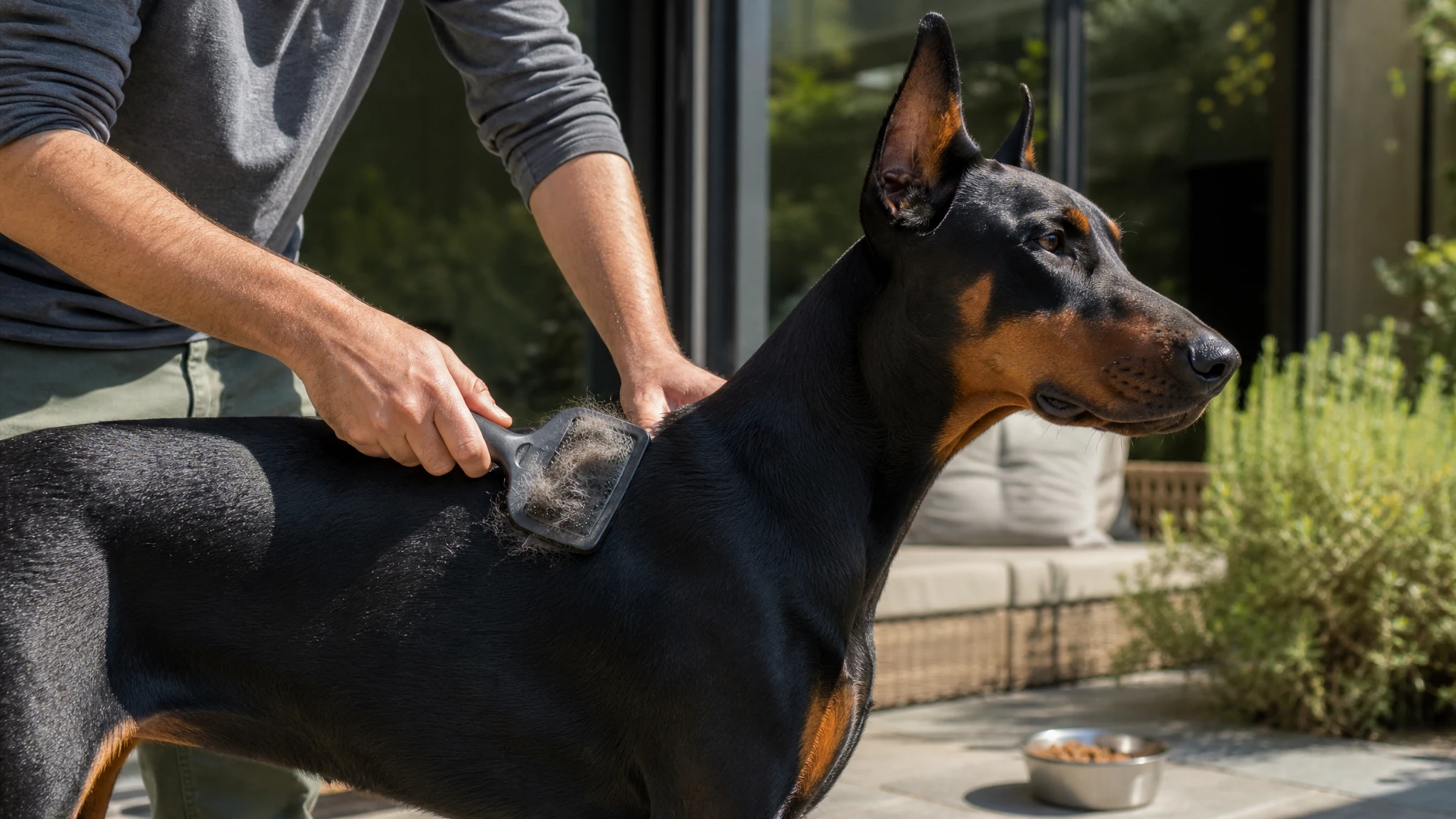
General nutrition information compiled from product labels and published sources, not veterinary advice. Your veterinarian is the right person to choose a diet for your dog, especially one with a health condition.
There is no Doberman-specific allergy food. We looked at brand pages for Hill's, Royal Canin and Victor, and none of them lists a Doberman formula. So the best dog food for allergies in your Doberman is the one your veterinarian helps you identify through a careful, step-by-step process.
This guide shows that process and how to read labels along the way. We compared label data only. We did not run feeding trials or taste tests, and nothing here says a food prevents, treats or cures an allergy.
What you need before you start
- A veterinarian who knows your dog's history. Skin and stomach problems have many causes, and a vet decides what applies to your individual dog.
- The ingredient list and nutritional adequacy statement of your dog's current food, plus every treat, chew and flavored medicine.
- A notebook or phone notes for symptoms, stool, itching and appetite.
- A kitchen scale or measuring cup, so portions stay consistent.
- Patience. A food trial is a slow process, and your vet will set its length.
Step 1: Talk to your veterinarian first
Itching, ear trouble and loose stools can come from food, but also from fleas, environmental triggers or other conditions. Self-diagnosing and switching foods at random usually muddies the picture.
Ask your vet whether a diet trial makes sense. If it does, they may recommend a prescription diet or a specific plan. Prescription diets are something only a veterinarian prescribes, so we do not rank them here.
Step 2: Write down everything your Doberman eats
List the main food, treats, dental chews, table scraps, chew toys with flavoring and anything used to hide pills. Share the full list with your vet. Hidden extras are a common reason a trial gives unclear results.
Step 3: Learn to read the label
Check these parts of any bag or tray:
- Ingredient list. Ingredients appear in order by weight. Note every protein source, including meals, fats and broths.
- Adequacy statement. This says whether the food is complete and balanced and for which life stage.
- Guaranteed analysis and calories. These help you compare foods and portions.
- Manufacturer contact. If the label is unclear about a protein source, ask the brand directly.
Marketing words such as "natural" or "sensitive" do not tell you what is in the bag. The ingredient list does.
Step 4: Compare the proteins in candidate foods
Many foods use several proteins at once. The table shows the first five ingredients from each brand's own product page, so you can see how mixed they are. None of these is a prescription or limited-ingredient diet, and we are not saying any of them suits an allergic dog.
| Food | First five ingredients |
|---|---|
| Hill's Science Diet Adult Large Breed Chicken & Barley | Chicken, cracked pearled barley, brown rice, brewers rice, whole grain wheat |
| Royal Canin Size Health Nutrition Large Breed Adult | Chicken by-product meal, brewers rice, wheat, brown rice, chicken fat |
| Victor Classic Hi-Pro Plus Large Breed Puppy | Chicken, chicken meal, brown rice, whole grain millet, whole grain sorghum |
| Freshpet Large Dog Multi-Protein Recipe | Chicken, egg, beef, salmon, beef liver |
| Just Food For Dogs Beef & Russet Potato | Beef, beef liver, russet potatoes, sweet potatoes, carrots |
Notice that chicken appears in most of them, and the Freshpet recipe has four proteins in its first five ingredients. If your vet suspects a particular ingredient, this kind of comparison shows quickly which foods contain it. For Royal Canin, check the brand's own page or bag, because retailer listings of its fiber figure disagree.
Step 5: Match the life stage and large-breed rules
Dobermans are large dogs. Hill's lists adult weight at 60 to 100 pounds, and PetMD gives the same range. An allergy-minded switch should never leave a growing puppy under-fed or poorly balanced.
The Whole Dog Journal explains that a food labeled for growth or all life stages must say either "including growth of large-size dogs (70 lb or more as an adult)" or "except for growth of large-size dogs." For a Doberman puppy, look for the "including" version.
- Victor's Classic Hi-Pro Plus page excludes growth of large-size dogs. It is not suitable for Doberman puppies.
- Victor's Chicken and Rice Pate also excludes growth of large dogs.
- Victor's Large Breed Puppy page and Freshpet's Vital Large Breed page both say all life stages, but check the package for the large-size growth clause before buying.
- Just Food For Dogs says its Beef & Russet Potato recipe is not intended for growing puppies.
- Hill's says its Adult Large Breed and Adult 6+ foods are not for large breed puppies.
The Whole Dog Journal also notes that large-breed puppy diets cap calcium at 1.8 percent on a dry matter basis and that large puppies need to grow slowly. Ask your vet before changing a puppy's diet. Our Doberman nutrition overview covers the wider diet picture.
Step 6: Run the diet trial exactly as your vet directs
A food trial generally means feeding one planned diet and nothing else for a set period. Your vet picks the food and the length. Keep these habits:
- Feed only the approved food and approved water.
- Stop all other treats and flavored items unless your vet clears them.
- Keep the household on board. One slipped scrap can restart the clock.
- Measure portions the same way each day.
- Log symptoms daily.
When switching foods, introduce the new one gradually unless your vet says otherwise. Just Food For Dogs, for example, recommends a slow introduction over 3 to 5 days.
Step 7: Feed sensibly for a deep-chested dog
PetMD advises feeding adult Dobermans two meals a day instead of one large meal to reduce the risk of bloat (gastric dilatation volvulus). Freshpet's page says its large-dog recipes can be fed as one meal or split into two. For a Doberman, split is the safer reading.
Treat label feeding charts as starting points. Hill's Adult Large Breed page, for instance, lists about 3 1/4 cups a day for a 50 pound dog and 5 1/3 cups for a 100 pound dog, and says to adjust to maintain optimal weight. The DPCA also notes that weight control matters in large breeds prone to hip and elbow dysplasia.
Step 8: Review the results with your vet
Bring your symptom log to the follow-up. Your vet may suggest keeping the food, trying a different plan or testing a single ingredient at a time. Do not reintroduce old ingredients on your own while a trial is still running.
Tips that help
- Keep the original bag or a photo of the label. Formulas can change.
- Call the brand if a protein source is unclear.
- Change one thing at a time so you can tell what made a difference.
- Check the bag for the large-size growth clause on any all-life-stages food for a puppy.
Common mistakes to avoid
- Assuming grain-free means allergy-friendly. Our sources do not say that. The FDA began investigating diets with peas, lentils, other pulses or potatoes high in the ingredient list, many labeled grain-free, in July 2018. Its latest update was December 23, 2022, and no cause has been established. Dobermans can have a genetic predisposition to dilated cardiomyopathy (DCM), according to Hill's, so talk to your vet before choosing a grain-free diet.
- Switching foods every few weeks. It makes results hard to read.
- Forgetting treats and chews. They count.
- Feeding an adult-only food to a puppy. Check the adequacy statement.
- Adding supplements on your own. Ask your vet first.
What results to expect
Some owners see their dog's symptoms ease during a well-run diet trial, but results vary and nothing is guaranteed. A food cannot be promised to prevent, treat or cure an allergy, and a vet decides what is right for an individual dog. If symptoms continue, your vet can look for other causes.
Keep the bigger picture in mind too. Hill's gives a Doberman life expectancy of 10 to 12 years, while WSAVA cites Finnish statistics of about 8 years, mainly because of DCM. Regular heart screening and vet checks matter alongside any food choice.
Sources
- Doberman Pinscher Club of America, Health
- Hill's Pet Nutrition, Doberman Pinscher Dog Breed Guide
- PetMD, Doberman Pinscher Dog Breed Health and Care
- WSAVA, Meet the Dobermann
- FDA CVM, Investigation into Potential Link between Certain Diets and Canine DCM
- Whole Dog Journal, In the Fine Print: Nutritional Adequacy Statements
- Whole Dog Journal, Best Large Breed Puppy Food
- Hill's Science Diet Adult Large Breed
- Victor Hi-Pro Plus Large Breed Puppy
- Freshpet Large Dog Multi-Protein Recipe
- Just Food For Dogs Beef & Russet Potato