Best Dog Food for Dobermans by Life Stage: Puppy, Adult, Senior
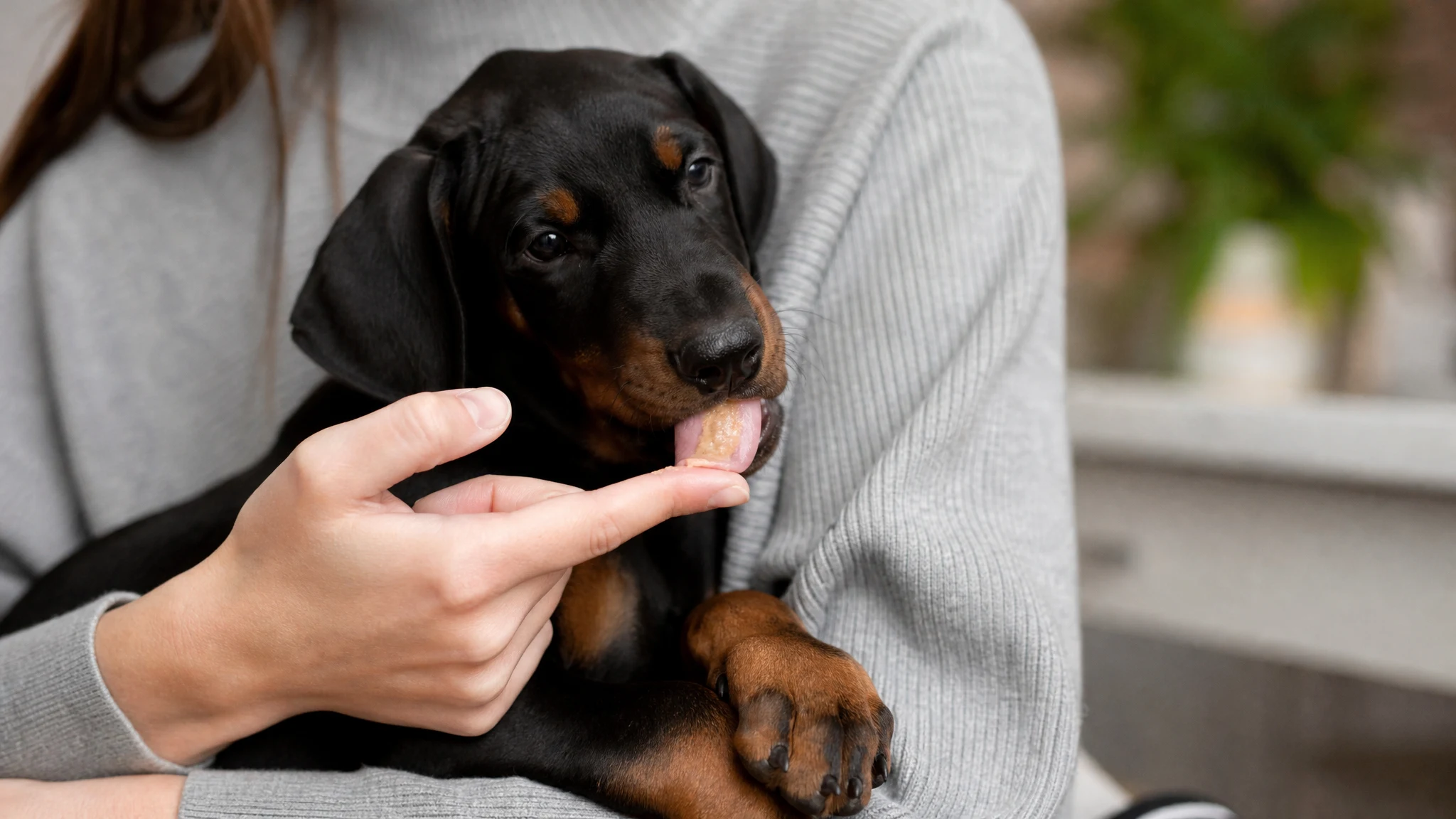
General nutrition information compiled from product labels and published sources, not veterinary advice. Your veterinarian is the right person to choose a diet for your dog, especially one with a health condition.
No food is made specifically for Dobermans. We looked at the Royal Canin, Hill's, Victor and Freshpet pages and found size-based and life-stage formulas, but no Doberman line. So the best dog food for Dobermans is the one whose label fits your dog's age, size and health, as decided with your veterinarian.
This guide shows how to read a label and match it to a life stage. We compared label data from brand pages. We did not run feeding trials or taste tests, and we are not ranking products.
What You Need Before You Start
- Your dog's age and current weight.
- The bag, can or package of any food you are considering, so you can read the real label.
- A measuring cup and a kitchen scale, if you have one.
- A note of any health issues, such as heart screening results.
- Your veterinarian's contact details, for the final decision.
For context, the Doberman Pinscher Club of America (DPCA) standard describes a height of 24 to 28 inches. Hill's Pet Nutrition and PetMD put adult weight at about 60 to 100 pounds, with males usually heavier. Hill's lists the breed as large. That size is why growth and weight control matter so much in feeding.
Step 1: Learn the Label Phrase That Matters Most
Look for the AAFCO nutritional adequacy statement. It says which life stage the food is built for. Whole Dog Journal explains that a food labeled for growth or all life stages must say either "including growth of large-size dogs (70 lb or more as an adult)" or "except for growth of large-size dogs (70 lb or more as an adult)."
A Doberman puppy will likely pass 70 pounds as an adult, so the "including" version is the one to look for. The "except" wording does exist on real products. Victor's Classic Hi-Pro Plus page uses it.
Step 2: Choose a Puppy Food
Large puppies need to grow steadily, not fast. Whole Dog Journal says large and giant breed puppy diets cap calcium at 1.8 percent on a dry matter basis. It also gives an ideal calcium to phosphorus ratio of 1.1:1 to 1.4:1 and says a complete diet needs no added calcium. The aim is to lower the risk of developmental orthopedic disease. A veterinarian can tell you how this applies to your puppy.
Here is what the brand pages show for large breed puppy foods:
- Hill's Science Diet Puppy Large Breed Chicken & Brown Rice: AAFCO feeding tests for growing puppies. It is for large breed puppies up to 18 months. It lists 387 kcal per cup. First ingredients are chicken, brown rice, whole grain oats, chicken meal and cracked pearled barley.
- Victor Classic Hi-Pro Plus Large Breed Puppy: the page says all life stages. It lists 30 percent minimum protein, 14 percent minimum fat and 365 kcal per cup. The text we saw did not show whether the large-size growth clause is printed, so check the bag.
- Freshpet Vital Large Breed: a refrigerated fresh food, listed as all life stages. Check the package for the same clause.
Do not use Victor's Classic Hi-Pro Plus (the adult formula) or the Victor Chicken and Rice Pate for a Doberman puppy. Their pages exclude growth of large dogs.
Hill's says Dobermans often keep filling out until age 2 or 3. The Hill's puppy food is listed up to 18 months, so ask your vet when to switch.
Step 3: Choose an Adult Food
Adult foods carry a maintenance statement. Compare calories and ingredients, and remember that Dobermans are lean, active dogs.
- Hill's Science Diet Adult Large Breed Chicken & Barley: for ages 1 to 5, dogs 55 to 110 pounds. It lists 365 kcal per cup. Hill's gives average nutrient values, not guaranteed minimums. Its averages are 23.8 percent protein, 15 percent fat and 1.7 percent fiber, dry matter basis. Hill's says it is not for large breed puppies.
- Royal Canin Size Health Nutrition Large Breed Adult: for dogs 15 months to 5 years and 56 to 100 pounds. A retailer listing gave a 24 percent protein minimum, 15 percent fat minimum, 360 kcal per cup and a fiber maximum of 3.3 percent. A second listing said 3.2 percent. Confirm the numbers on the bag or on Royal Canin's own site.
- Freshpet Large Dog Multi-Protein: fresh, adult maintenance. It lists 348 kcal per cup. It can be fed as one meal or split into two.
- Victor Classic Hi-Pro Plus: a high-energy formula at 406 kcal per cup, with 30 percent protein and 20 percent fat minimums. It suits active adults, not puppies. Its richness means portions deserve extra care.
Just Food For Dogs also sells a frozen Beef & Russet Potato recipe for adult maintenance. The page says it is not for growing puppies.
Step 4: Choose a Senior Food
Hill's lists a Science Diet Adult 6+ Large Breed Chicken Meal, Barley & Rice for large dogs 6 and older. It lists 352 kcal per cup. Its averages are 18.7 percent protein, 13.5 percent fat and 2.4 percent fiber. It is not for large breed puppies.
The Victor Senior Healthy Weight has an adult maintenance statement, 27 percent protein minimum, 11.5 percent fat minimum and 360 kcal per cup. Its page mentions glucosamine and chondroitin for large breeds. Ask your vet before adding any supplement, and follow the label or vet advice on amounts.
Life expectancy matters when you plan for senior years. Hill's and PetMD say 10 to 12 years. WSAVA cites Finnish statistics of about 8 years, mainly because of dilated cardiomyopathy (DCM). So "senior" may start earlier for some Dobermans. Your vet can judge when.
Step 5: Set Portions and Meal Schedule
Start with the feeding guide on the package. These are starting points, based on weight, age and activity. Then adjust to keep your dog lean.
Examples from the brand pages: Hill's adult large breed lists 3 1/4 cups a day for a 50 pound dog and 5 1/3 cups for a 100 pound dog. Victor Hi-Pro Plus says to add 1/2 cup for every 20 pounds over 100. Hill's mature adult chart runs from 3 cups at 50 pounds to 7 cups at 160 pounds.
PetMD advises feeding adult Dobermans two meals a day instead of one large meal, to help reduce the risk of bloat (gastric dilatation volvulus). For amounts by age and weight, see our Doberman feeding chart.
If your dog has a health condition, confirm amounts with your vet before changing anything.
Step 6: Switch Foods Slowly
Mix a little of the new food into the old, and raise the share over several days. Just Food For Dogs suggests 3 to 5 days for its frozen food. A slower change is fine if your dog has a sensitive stomach. Ask your vet if you see ongoing digestive upset.
Tips
- Read the whole adequacy statement, not just the front of the bag.
- Compare calories per cup before you compare cups per day.
- Weigh your dog every month or so and write it down.
- Check the bag for the large-size growth clause on every puppy food.
Common Mistakes to Avoid
- Feeding an "except large-size growth" food to a puppy. Check the clause.
- Treating Hill's averages as minimums. They are different measures, so do not compare them directly to other brands' minimums.
- Adding calcium to a complete puppy food. Whole Dog Journal says a complete diet needs none.
- Choosing by grain content alone. The FDA began investigating a possible link between certain diets and DCM in July 2018. Those diets had peas, lentils, other pulses or potatoes high on the ingredient list, and many were labeled grain-free. The FDA's last update was December 23, 2022, and no cause has been established. The DPCA and Hill's both note that some Dobermans have a genetic predisposition to DCM. Talk to your vet about diet and heart screening.
- Expecting food to fix a health problem. Diet is one part of care. Hip dysplasia, for example, is inherited. The DPCA says weight control matters in large breeds, but food does not treat it.
What to Expect
A well-matched food and measured portions may help your Doberman keep a steady growth rate as a puppy and a lean body condition as an adult. Many owners notice stable energy and regular stools within a few weeks. Results vary by dog. Your vet should check weight, heart health and any special needs. A prescription diet is something only a veterinarian can prescribe.
Sources
- Doberman Pinscher Club of America, Official Standard
- Doberman Pinscher Club of America, Health
- Hill's Pet Nutrition, Doberman Pinscher Dog Breed Guide
- PetMD, Doberman Pinscher Dog Breed Health and Care
- WSAVA, Meet the Dobermann
- FDA CVM, Investigation into Potential Link between Certain Diets and Canine DCM
- Whole Dog Journal, Best Large Breed Puppy Food
- Whole Dog Journal, In the Fine Print: Nutritional Adequacy Statements